- Client-Centered Therapy
- CBT techniques
- Existential work
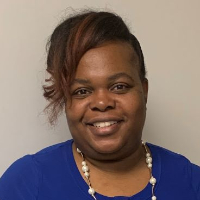
About Shironda
She began counseling in 2005 and has been licensed in North Carolina since 2012. Her early work included settings such as prisons, courts, schools, hospitals, and an army base. That range shaped how she approaches practical problems and life transitions.
In sessions she favors conversation that centers the person in front of her. She uses Client-Centered Therapy to listen and reflect, and draws on Cognitive Behavioral Therapy to identify unhelpful thoughts and patterns. She also uses Existential ideas to look at values and meaning when those questions matter.
Shironda adapts her methods to the issue at hand. For someone facing parenting or blended-family stress she focuses on clear communication and problem-solving. For anxiety or depression she will work on practical strategies you can use between sessions.
People who come to her for relationship or intimacy concerns can expect direct discussion of behaviors, communication habits, and choices. When trauma or abuse is part of the history she approaches those topics with careful pacing and attention to what the person needs in the moment.
Areas of expertise
Primary focus
Also works with
Additional focus areas
Therapeutic approaches
Experience
21+ years
Credentials
North Carolina
Languages
English
How her approaches translate to online work
Shironda uses Client-Centered Therapy to focus on the client's concerns, listening and reflecting to understand what feels most urgent. That method helps when someone needs straightforward conversation about self esteem, relationships, or parenting. Cognitive Behavioral Therapy is used to spot unhelpful thoughts and try practical behavior changes; this is useful for anxiety, depression, and ADHD-related patterns.Choosing which approach to use is collaborative. She will discuss goals, preferences, and the problems you want to address, and together decide whether conversation-focused work, CBT strategies, or existential reflection fits best for now. The plan can change as progress is made.
Session format details are not specified in the biography, so confirm current session options before booking. Online work can make it easier to fit sessions into a busy life - for example a shorter check-in during a break or scheduling without travel time. It can also reduce barriers like arranging childcare or taking time off work, depending on a person's routine. Licensed professionals can adapt exercises and homework to an online setting so you can practice skills between meetings.
Frequently asked questions
What concerns does she address most often?
She commonly helps people with stress, anxiety, depression, relationship and intimacy issues, parenting concerns, anger, ADHD, trauma and self esteem struggles.
What is her therapy style like?
Her style is interactive and person-focused, using conversation to clarify problems and set practical goals.
How long has she practiced counseling?
She has been providing counseling since 2005 and has been licensed in North Carolina since 2012, totaling 21 years of experience.
What credential does she hold and where does she practice?
She holds the LCMHC credential and practices in North Carolina.
Which languages are sessions offered in?
Sessions are offered in English.
Can people outside the United States work with her?
International clients are not currently accepted.
How are sessions scheduled and what does cost look like?
Cost varies with location and sessions use a subscription that can be canceled at any time.
How do I begin if I want to work with her?
Start by selecting the See online therapy options button, complete a short matching questionnaire, and then schedule a first session.